


By S B Shaheen, Fragrance Expert at Perfumeo. Last updated October 2026.
You can already smell the notes. What you cannot do yet is name them, and that is a different skill entirely.
Almost nobody has a bad nose. What people have is an unlabelled memory, and that is fixable in about a week of paying attention. Here is how we would do it.
Why naming is the hard part
Smell reaches memory and emotion before it reaches language. That is why a scent can throw you back twenty years instantly, and also why you can know you have smelled something before without being able to say what it is.
Recognition works by matching. To name cardamom in a fragrance, you need a stored impression of cardamom that already has the word attached. If you have never deliberately smelled cardamom on its own, your nose registers it and your brain files it as warm and spicy, which is as far as it can go.
So the work is not improving your nose. It is building a reference library.
The method
| What to do | What you are training | |
| Start in the kitchen | Smell cinnamon, cloves, coffee, vanilla, black pepper and a cut lemon one at a time, naming each out loud | A labelled memory, which is the part most people are missing |
| Wear one fragrance all day | Smell your wrist at ten minutes, one hour, three hours and bedtime | Recognition of how a pyramid actually moves |
| Smell on paper and on skin | Spray a strip and your wrist from the same bottle, then compare them through the day | The difference your own skin makes to a composition |
| Read the list afterwards | Describe what you smell first, then check the published pyramid | Honest perception rather than suggestion |
| Stop at three | Limit yourself to three fragrances in a session, with breaks between | Working around nose fatigue, which sets in within minutes |
None of this requires buying anything. The materials are in your kitchen and the fragrances are already on your shelf.
Week one, in practice
Days one to three, raw materials only. Go through your kitchen. Cinnamon, cloves, cardamom, black pepper, coffee, vanilla, a cut lemon, an orange peel, fresh mint, rosemary. Smell each one on its own and say the name out loud. Out loud matters, because you are deliberately welding the word to the smell.
Add anything you have around the house: leather, cedar from a drawer, pine, damp earth after rain, a struck match for smoke, black tea.
Days four and five, one fragrance each. Take something you own and wear it properly. Smell your wrist at ten minutes, at an hour, at three hours and before bed. Write down what you get each time in plain words. Bright, sharp, sweet, dusty, powdery, smoky. Do not reach for perfume vocabulary you do not own.
You are looking for the moment it changes character. Once you have felt a fragrance move from its opening into its heart on your own skin, the three-layer structure stops being an abstraction. We explain that structure in what fragrance notes are.
Days six and seven, check your work. Now read the published note list for what you wore and compare it against your notes. You will find you got more right than you expected, and the ones you missed will teach you the most.
Do this in that order. Reading the list first contaminates the exercise, because once you have been told there is saffron in something you will smell saffron whether or not it is there.
Working around nose fatigue
Your nose stops responding to a smell it is continuously exposed to, usually within a few minutes. This is why you cannot smell your own fragrance after you leave the house while everyone else can, and why the fifth fragrance in a shop smells like the fourth.
Three fragrances per session is the sensible maximum. Leave several minutes between them.
The coffee beans you see on shop counters do not reset anything, despite how widespread the belief is. What actually helps is a break, fresh air, or smelling the crook of your own elbow, which gives your nose a neutral baseline.
Mornings tend to work better than evenings, and a cold will take you out entirely for a few days.
Start with the notes that teach you most
If you want to be efficient, learn these first. They turn up constantly and they are distinctive enough to pin down.
- Bergamot. Opens more fragrances than any other material. Sharp citrus with a slightly bitter, floral edge, not the same as lemon.
- Vanilla. Easy to recognise and a useful anchor for everything else.
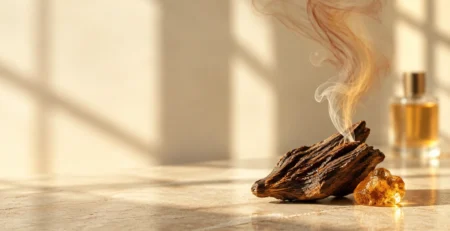
- Oud. Unmistakable once you have smelled it properly. Our guide to what oud actually smells like covers it.
- Vetiver. Earthy, dry and slightly smoky, and it teaches you the difference between earthy and woody.
- Cinnamon. Warm and sweet-spicy, and it carries most Arabian gourmands.
- Ambroxan. The clean, salty, skin-like warmth in an enormous number of modern releases. Once you can spot this, you will spot it everywhere.
- Oakmoss. Damp forest floor. It defines the chypre family and smells like nothing else.
Several of these have confusing names or are not what people assume. We cover twelve of the worst offenders in confusing fragrance notes explained in three words.
What to expect
Be realistic about the ceiling. After a week you will reliably name broad families and the handful of materials you practised. After a few months of paying attention you will pick out individual notes in most things you smell.
You will not reach the point of deconstructing a formula, and neither will anyone else without years of professional training. Trained perfumers work from a reference library of hundreds of materials and spend years on it.
You also will not be right every time, and some of that is not your fault. People vary genetically in what they can smell, and a significant minority cannot detect certain musks at all. If everyone describes a fragrance one way and you get something different, you are not failing.
Frequently asked questions
How do I identify fragrance notes?
Build a labelled reference library first. Smell raw materials from your kitchen one at a time and name each out loud, then wear a single fragrance for a full day and track how it changes. Describe what you smell before reading the published note list, not after.
How do you learn fragrance notes quickly?
Concentrate on the materials that appear most often rather than trying to learn everything. Bergamot, vanilla, cinnamon, vetiver, oud, ambroxan and oakmoss will cover a large share of what you encounter, and each is distinctive enough to recognise reliably.
How do you smell fragrance notes properly?
Short sniffs rather than long deep ones, with pauses in between. Smell both a paper strip and your own skin, since they develop differently. Limit yourself to three fragrances in a session, because your nose stops responding within minutes of continuous exposure.
Why can I not smell my own perfume?
Your nose adapts to a continuous smell and stops registering it, usually within minutes. Everyone else can still smell it perfectly well. This is the main reason people over-apply, so count your sprays rather than judging by whether you can still detect it.
Do coffee beans reset your nose?
No, despite how common the practice is. Coffee is simply another strong smell. A short break, fresh air, or smelling the crook of your own elbow for a neutral baseline all work better.
How long does it take to learn fragrance notes?
A week of deliberate practice gets you naming broad families and the materials you worked on. A few months of paying attention gets you picking out individual notes in most things. Full professional ability takes years and a formal reference library.
Where to go next
Once you can name what you smell, use it. What fragrance notes go together explains how pairings work and how to find the material your own taste keeps returning to.
About the author
S B Shaheen runs Perfumeo, a UK retailer of Arabian and designer fragrance, and writes the guides published here. He buys and wears the stock the shop sells. Read more about the author.










Leave a Reply