

The short answer
Yes. Rasasi is one of the oldest and largest fragrance houses in the UAE, it has been operating since 1979, it manufactures at scale in its own facilities, and it works with perfumers who also compose for European luxury houses. It is not a cheap brand pretending to be a serious one. It is a serious one that happens to be affordable in the UK.
That said, it is not flawless, and the criticisms are worth knowing before you build a collection around it.
- Free DeliveryTracked, on every UK order
- No Minimum SpendEven on a single bottle
- Same Day DispatchOrder before 2pm
Hand-picked by our fragrance team
Sold-out bottles drop off this list automatically. Everything here is ready to ship today.
100% genuine, sealed stock, shipped from our UK warehouse
By S Bin Shaheen, Fragrance Expert at Perfumeo. Last updated September 2026.
If you have found your way to Rasasi through Hawas, the question that usually follows is whether the house behind it is any good, or whether one viral fragrance is carrying the rest. It is a fair question, and the answer is more interesting than the marketing copy on most retail sites.
Where Rasasi came from
The company started in 1979 as a single shop in Murshid Bazar, the old souk district of Deira in Dubai, opened by Haji Abdul Razzak Kalsekar. His idea was contrarian for the time. While other traders in the market imported European fragrances, he set out to build a house around traditional Gulf ingredients and blending, treated with the seriousness usually reserved for imported luxury.
It stayed a family business. The founder’s six sons each took responsibility for a different part of the company, and Saleem Abdul Razzak Kalsekar now serves as Managing Director after four decades in the business.
Rasasi also pioneered something now taken for granted across the region: the dedicated single-brand fragrance store. Before that, Gulf perfume retail meant multi-brand souk stalls. The model was widely copied.
Why the manufacturing matters
This is the part that separates Rasasi from a great many affordable Arabian labels, and it rarely gets mentioned.
Rasasi built its first factory in 1986 on a 5,000 square metre site in the Jebel Ali Free Zone, dedicated to distilling oud oil. It added a second facility in 1989 and an aerosol plant in 1999, and its manufacturing footprint now runs to roughly 12,500 square metres.
Plenty of brands in this price bracket do not manufacture at all. They commission, they rebrand, or they buy finished juice. A house that owns its distillation and production has direct control over consistency, which is the single biggest variable in affordable perfumery and the reason batch quality varies so wildly elsewhere.
The retail footprint tells a similar story: over 165 stores across the GCC and distribution reaching sixty countries and beyond.
The perfumers
Rasasi’s catalogue runs past 400 fragrances, and the credited perfumers include Dominique Ropion, Cristiano Canali, Christian Provenzano, Benjamin Belizon, Daniel René and Claire Liégent. Several of those names compose for European luxury and niche houses.
That does not make every Rasasi release excellent. It does mean the house buys real perfumery talent rather than relying entirely on in-house copying, which is more than can be said for much of the market it competes in.
What the community actually thinks
Across more than 370 rated Rasasi fragrances, the house averages around 7.4 out of 10. For context, that is a respectable score for a mainstream house of any price, and notably it is an average across the entire catalogue rather than a figure for the handful of hits.
Its Western-facing breakthrough was Blue Lady rather than Hawas, and it remains one of the fragrances the brand is best known for in its home markets.
The honest criticisms
Three come up repeatedly and all three are fair.
Openings can read synthetic. Experienced wearers frequently describe the first minutes of Rasasi’s fresh fragrances as sharp or chemical before they settle. Hawas draws this criticism most often. It is a real characteristic of the price bracket rather than a defect unique to this house, but it is there.
Batches need settling. Community reports consistently describe Rasasi fragrances improving after two to four weeks in the bottle, and Hawas Ice in particular is known for underwhelming on first spray from a fresh batch. If you open something and feel let down, wait a fortnight before judging.
Note lists are unreliable across retailers. This is our own finding from building these listings. We have seen the same pyramid printed against three different Rasasi fragrances by three different sellers, and one sample retailer publishing Hawas Tropical’s notes under Hawas Elixir. The fault sits with retailers copying each other rather than with Rasasi, but it means you should always check against the brand’s own listing or an independent one.
Where Rasasi genuinely excels
Performance, consistently. Eight to ten hours on skin is normal across the range and considerably longer on clothing, with projection that carries through the opening hours. That is the reason Hawas built a following in a market crowded with fresh fragrances that vanish by lunchtime.
Breadth is the other strength. The house runs both Oriental and Occidental lines, meaning traditional oud, rose and attar compositions alongside modern Western-style sprays. Most affordable houses do one or the other competently. Rasasi does both.
Where to start
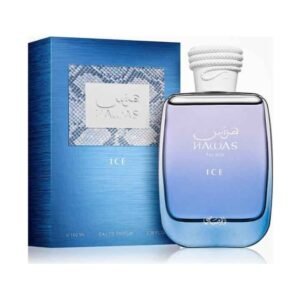
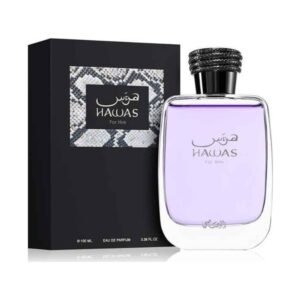
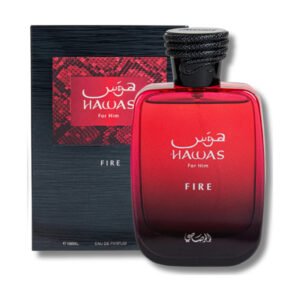
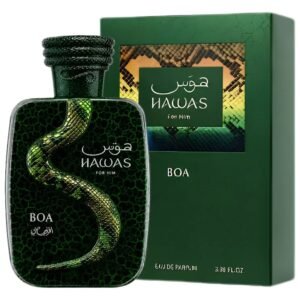
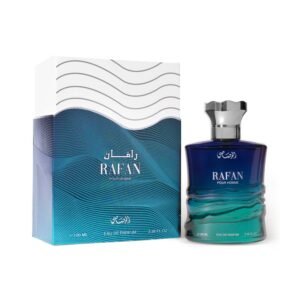
The original Hawas remains the obvious entry point and the fragrance that made the name outside the Gulf. If you want the same freshness with less sweetness, Hawas Ice is the crisper version. For maximum presence, Hawas Fire projects harder than anything else in the line. For something quieter and more office-appropriate, Rafan from the separate Duo Collection is a salty aquatic that sits close to the skin.
Our guide to every Hawas fragrance compared covers the range properly, and our honest review of Hawas itself goes deeper on the one most people buy first.
Everything on our shelves
Sold-out bottles are hidden automatically, so what you see here you can order now.

Frequently asked questions
Is Rasasi a luxury brand?
Not in the European sense, and it does not price itself that way in the UK. It sits in the premium end of the affordable market: real manufacturing, credited perfumers and strong performance, at a fraction of designer pricing.
Where are Rasasi perfumes made?
In the United Arab Emirates, at the company’s own facilities in the Jebel Ali Free Zone in Dubai, where it has manufactured since 1986.
Is Rasasi the same as Lattafa or Armaf?
No, they are separate companies. Rasasi is older than both, founded in 1979, and it manufactures its own fragrances rather than operating primarily as a brand and distribution business.
Which Rasasi fragrance is the most popular?
Hawas by a wide margin in Western markets, released in 2015 and still the fragrance most people encounter first. Blue Lady was its earlier breakthrough and remains a staple in its home markets.
Are Rasasi perfumes long lasting?
Yes, and it is the house’s most consistent strength. Eight to ten hours on skin is typical across the range, with clothing holding it substantially longer.
Are Rasasi fragrances faked?
Popular ones are, Hawas especially, and marketplace listings are where most problems occur. Check that the batch code on the bottle matches the box and is cleanly etched rather than printed on a sticker, and buy from a stockist that handles its own inventory.
The verdict
Rasasi is a genuine fragrance house with nearly fifty years of history, its own factories, credited perfumers and a catalogue that stretches well beyond the one fragrance that made it famous. It is not perfect, the openings can be sharp and the marketing outpaces the composition at times, but the foundations are real.
Browse the full Rasasi collection, all genuine sealed stock with free UK tracked delivery.

Leave a Reply