
- Free DeliveryTracked, on every UK order
- No Minimum SpendEven on a single bottle
- Same Day DispatchOrder before 2pm
Hand-picked by our fragrance team
Sold-out bottles drop off this list automatically. Everything here is ready to ship today.
100% genuine, sealed stock, shipped from our UK warehouse
By S Bin Shaheen, Fragrance Expert at Perfumeo. Last updated: 17 August 2026. Prices and availability checked at the time of update.
Ask about Lattafa Atlas in any fragrance group and someone will tell you it’s a Megamare clone within about four replies. That answer is roughly right and completely unhelpful, because it tells you nothing about whether you should buy it, and nothing at all about the two new bottles that joined the line this year.
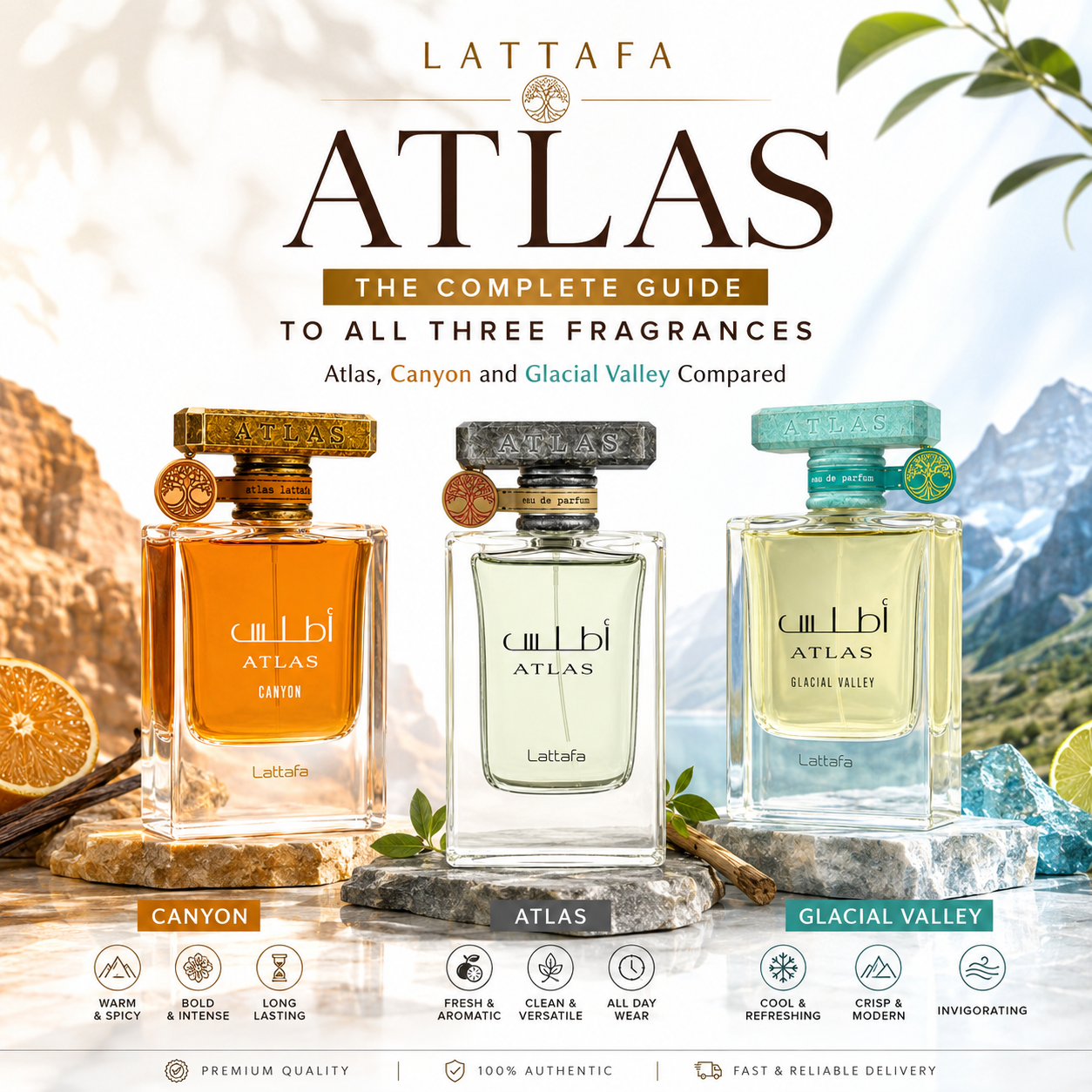
There are three Atlas fragrances now. The original from 2024, plus Atlas Canyon and Atlas Glacial Valley, both released in 2026. They share a name, a bottle format and a general mood. They do not share a scent profile, and one of them isn’t really marine at all.
Here’s what each one actually replaces, how close the comparison gets, and which is worth your money.
The short verdict: is Lattafa Atlas worth it?
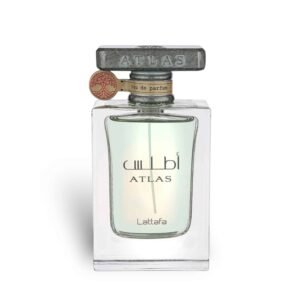
Yes, comfortably, if salty marine fragrance is a gap in your collection. Atlas delivers a niche-style salt-and-ambergris profile with genuinely strong projection at a mainstream Arabian price point, and it is the closest accessible route to the Orto Parisi Megamare experience currently on the UK market.
It is not a perfect match, and anyone telling you otherwise hasn’t worn both. Atlas runs softer and slightly sweeter, and it loses the bone-dry mineral austerity that makes Megamare polarising in the first place. For most buyers that’s an improvement rather than a compromise.
The two 2026 flankers are a different conversation. Canyon and Glacial Valley aren’t chasing Megamare or anything else in particular, which makes them harder to justify on pure value logic and more interesting on their own terms.
Atlas and Megamare: how close is it really
Megamare is an extrait by Orto Parisi, and it is priced like a niche extrait by a house with a cult following: at the time of writing it sells for between roughly £140 and £200 for 50ml at UK stockists such as Liberty and Harrods. Atlas is a 55ml eau de parfum from a Dubai house that sells at volume, priced at £23.99 here at Perfumeo. That makes Megamare six to eight times the price for slightly less juice, so the only question that matters is how much of the experience survives the journey.
Quite a lot, is the honest answer. The salt is there. So is the wet, mineral quality that makes Megamare smell less like a beach holiday and more like standing on wet rock while the tide comes in. The ambergris and oakmoss in the base do the heavy lifting, and they do it well.
Where it separates: Megamare carries a slightly dirty seaweed character through the heart that Atlas doesn’t attempt. Atlas by Lattafa puts iris and davana there instead, which reads floral and a little powdery, and it softens the whole composition. The dry-down goes creamier too, with sandalwood rounding off edges that Megamare deliberately leaves sharp.
The most careful published comparison I’ve seen puts it at around a 70% match. That feels about right to me. You would not fool someone who wears Megamare regularly. You would absolutely satisfy someone who tried Megamare, loved the idea, and looked at the price.
One practical note. Megamare is an extrait and Atlas is an EDP, so you’re comparing across concentrations before you compare anything else. If that distinction isn’t second nature yet, how eau de parfum differs from extrait is worth five minutes.
Why “clone” is the wrong word here
Unpopular opinion in a dupe guide, but here it is. Calling Atlas a clone undersells it.
A clone is an attempt at replication where the goal is that nobody can tell. That’s a legitimate category and plenty of Arabian houses work in it deliberately. Atlas isn’t doing that. It takes the salt-and-ambergris idea, removes the part that makes it difficult, and sells the result to people who wanted the concept without the confrontation.
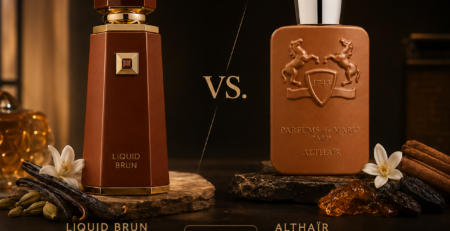
That’s closer to interpretation than duplication, and it’s why Atlas has outlasted the initial dupe-hype cycle while genuinely identical clones tend to burn out once the novelty fades. The same thing happened with Liquid Brun and the Althair question, where the interesting part turned out to be the divergence rather than the overlap.
Worth saying plainly because it changes what you should expect when the bottle arrives. If you buy Atlas expecting Megamare, you’ll spend the first week cataloguing differences. Buy it as its own salty marine fragrance and you’ll just enjoy it.
How to judge a comparison like this for yourself
Most dupe disappointment comes from testing badly rather than from a bad dupe, so it’s worth knowing how to do it properly before you spend anything.
Judge the dry-down, not the opening. Top notes are the cheapest part of any fragrance to approximate. Citrus, salt and fresh accords are relatively simple materials, and almost any competent house can land a convincing first ten minutes. The base is where budgets show, because that’s where the expensive fixatives and naturals live. If a comparison holds up at hour four, it holds up. Atlas does, which is the main reason it has lasted.
Test on skin, and only on skin. Blotters are useful for a quick sniff in a shop and useless for a comparison, because they tell you nothing about how a fragrance behaves against body heat. Two fragrances that smell nearly identical on paper can diverge sharply within twenty minutes on a wrist.
Don’t compare from memory. This is the one everybody gets wrong. Scent memory is genuinely poor at fine distinctions, and the gap between “I remember Megamare smelling like this” and Megamare actually smelling like that is wide enough to drive a verdict through. If you can, wear one on each arm.
Allow for the concentration gap. Comparing an eau de parfum against an extrait and concluding the EDP is weaker is not a finding, it’s arithmetic. Judge the character of the composition and treat performance separately.
Give it a full day. Almost every “this is nothing like the original” review I’ve read was written within an hour of spraying. Fragrances change. So does your nose, which stops registering something it has been smelling for two hours. Reserve judgement until the evening.
Apply that to Atlas and the verdict gets more generous, not less. Which is usually how it goes when people test properly.
Atlas Canyon: the citrus and ambroxan option
Canyon is the one whose name misleads people least and whose notes surprise them most.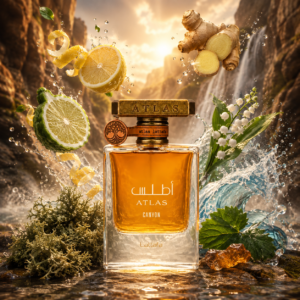
It opens on bergamot, lemon and a genuinely sharp hit of ginger. Bright, slightly spicy, more energetic than the original’s cold salt opening. The heart brings lily of the valley alongside sea notes, which keeps a thread back to the line’s marine identity without leading on it.
Then the base does something the original doesn’t. Patchouli and oakmoss give it an earthy, slightly damp depth, and ambroxan sits underneath pushing it outward. Lattafa classify it as hesperidic ambery, and that’s accurate. This is a fresh-woody-amber fragrance with a marine accent, not a marine fragrance.
Which makes Atlas Canyon the most conventionally wearable of the three, and the one I’d point an office wearer towards. Ambroxan-driven freshies are the default masculine category of the last decade for a reason. Canyon does that competently and adds citrus and ginger character on top.
No specific designer comparison has settled around it yet. Give it six months.
Atlas Glacial Valley: the fruity outlier
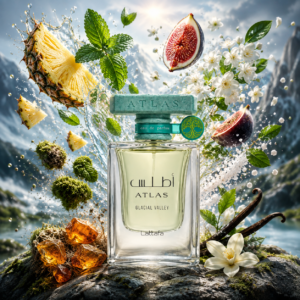
The third bottle is the one that breaks the pattern, and the one whose value case needs the most explaining.
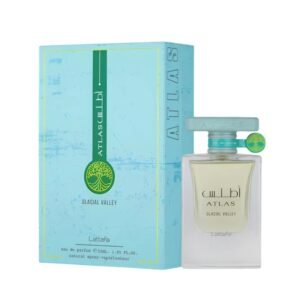
It opens on pineapple, mint and fig. The heart brings sea salt, jasmine and patchouli. The base lands on moss, amber, vanilla and musk. Lattafa classify it as oriental marine, and
the sweetness in that base makes Atlas Glacial Valley the richest thing in the Atlas family by a distance.
Pineapple over patchouli and moss is a combination with serious pedigree. Anyone who has spent time around premium fruity-mossy masculines of the last twenty years w
ill recognise the architecture immediately, and that category has historically been expensive to buy into. Glacial Valley is not a targeted match for any single bottle in it, but it occupies the same territory at a fraction of the entry cost.
That is a category substitution rather than a product substitution, and it is a weaker value argument than the original’s. Worth being straight about. You’re not replacing a specific bottle you were going to buy. You’re buying access to a profile that usually costs more, which is a real benefit but a different one.
What each Atlas actually replaces
| Fragrance | Price (55ml) | Scent profile | Closest to | What it replaces in a collection | Best for |
|---|---|---|---|---|---|
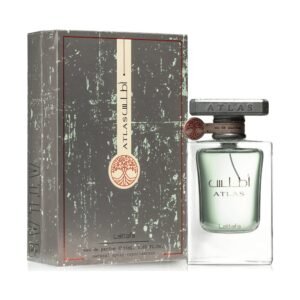
| Atlas | £23.99 | Salty marine, mineral, ambergris | Orto Parisi Megamare (roughly 70%) | Your expensive niche aquatic | Summer, coastal, statement freshness |
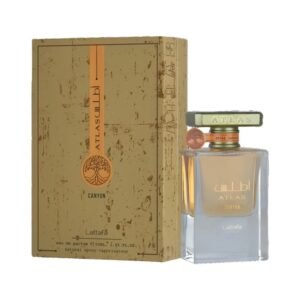
| Atlas Canyon | £34.99 | Citrus, ginger, earthy ambroxan | No settled match | A modern ambroxan freshie | Office, daily wear, year-round |
| Atlas Glacial Valley | £40.99 | Pineapple, fig, sweet mossy amber | No settled match | A fruity-mossy masculine | Evenings, cooler months, sweet-leaning wearers |
The value case is strongest on the original and thinnest on the flankers, which is the honest read. Atlas replaces something specific and expensive. Canyon and Glacial Valley replace a category rather than a bottle, and you should buy them because you like the profile, not because you’re saving money on a named alternative.
Performance: longevity, projection and season
This is where the Atlas line earns its reputation, and where it genuinely competes above its price bracket.
The original projects hard. Salt and ambergris are both tenacious materials, and the composition doesn’t hold back in the first two hours. Expect it to announce itself in a room, then settle into something closer to the skin without disappearing. Several wearers report it outlasting Megamare itself, which is plausible given the concentration difference works in Atlas’s favour on longevity even where it loses on refinement.
Canyon runs more moderate. Ambroxan bases tend to sit close and last long rather than project loudly, and the citrus opening burns off within the first hour as citrus always does. It’s the safest of the three in a shared space.
Glacial Valley sits in between, with the vanilla and amber base giving it staying power that the fruit opening doesn’t hint at.
Season splits cleanly. The original is a hot-weather fragrance and slightly odd in December. Canyon works year-round, which is most of its appeal. Glacial Valley leans autumn and winter, because sweet fruit over amber always does.
Every fragrance we sell gets worn and tested by the team before it goes on the site, and the ranges above reflect that rather than manufacturer claims.
Which Atlas should you actually buy
If you want one: the original, and at £23.99 it is also the cheapest of the three. It’s the one with a clear identity, the strongest performance, and the only genuine value story in the line. It’s also the cheapest way to find out whether salty marine fragrance suits you at all, which is not a given. Some people find ambergris and salt reads faintly like a swimming pool changing room, and there’s no arguing with that once your nose has decided.
If you already own a salty marine you like: Canyon. It fills a different slot and it’s the most practical bottle of the three.
If you like sweet fruit and don’t need the marine angle at all: Glacial Valley, and ignore the name entirely.
If you’re building from nothing, start with the original in summer and add Canyon when the weather turns. That covers most of the year with two bottles, and you can browse the full Lattafa range once you know which direction suits you.
Everything on our shelves
Sold-out bottles are hidden automatically, so what you see here you can order now.
Frequently asked questions
What is Lattafa Atlas a dupe of?
Lattafa Atlas is most often compared to Orto Parisi Megamare, sharing its salt, sea and ambergris profile. The match is close but not exact, at roughly 70%. Atlas replaces Megamare’s seaweed heart with iris and davana, making it softer, slightly sweeter and less austere.
Is Lattafa Atlas Canyon a dupe of anything?
No settled comparison has emerged yet. Atlas Canyon is a hesperidic ambery fragrance built on bergamot, ginger and lemon over patchouli, oakmoss and ambroxan. It sits in the modern fresh-woody-amber category rather than targeting a specific designer original.
How long does Lattafa Atlas last?
The original Atlas projects strongly for the first two to three hours and stays detectable well beyond that, helped by tenacious ambergris and salt materials. Canyon sits closer to the skin with longer quiet wear. Glacial Valley lands in between, carried by its vanilla and amber base.
Is Lattafa Atlas unisex?
Yes. All three are marketed as unisex, though the original is classified as men’s on some listings. The salty marine profile of Atlas and the citrus-ginger of Canyon both read neutral. Glacial Valley’s fruit and vanilla lean slightly sweeter, which some wearers read as more feminine.
Which Lattafa Atlas is best for summer?
The original, clearly. Its cold salt, sea notes and lemon opening is built for heat, and mineral ambergris performs better in warm weather than sweet bases do. Canyon works year-round. Glacial Valley’s fruity amber base suits autumn and winter better.
Are Lattafa Atlas fragrances genuine on Perfumeo?
Yes. Every bottle is sourced through verified channels and covered by our authenticity guarantee, and the team wears and tests each fragrance before it is listed. Lattafa Perfumes is a Dubai house selling globally, and counterfeits circulate mainly through third-party marketplace resellers.
Leave a Reply